Google is developing smart contact lenses that measure the glucose levels in diabetics' tears. If successful, Google's newest venture could help to eliminate one of the most painful and intrusive daily routines of diabetics.
When did this all start?
On 16 January 2014 Google announced that, for the past 18 months, they had been working on a contact lens that could help people with diabetes by making it continually check their glucose levels. The project is being carried out by Google X and it is currently being tested using prototypes. Google noted in their official announcement that scientists have long looked into how certain body fluids can help track glucose levels easier, but as tears are hard to collect and study, using them was never really an option. They also mentioned that the project is currently being discussed with the FDA while still noting that there is a lot more work left to do before the product can be released for general usage, which is said to happen in five years at best, and that they are looking for partners who would use the technology for the lens by developing apps that would make the measurements available to the wearers and their respective doctors.
What’s the difficulty in the conventional method of diabetes checkup?
Diabetes is a chronic problem, affecting about one in 19 people across the globe and one in 12 in the United States. People with diabetes have difficulty controlling the level of sugar in their bloodstream, so they need to monitor their glucose levels -- typically by stabbing themselves with small pin pricks, swabbing their blood onto test strips and feeding them into an electronic reader.
Google’s smart solution !!!
Google's smart contacts could potentially make blood sugar monitoring far less invasive.
The prototype contacts are outfitted with tiny wireless chips and glucose sensors, sandwiched between two lenses. They are able to measure blood sugar levels once per second, and Google is working on putting LED lights inside the lenses that would flash when those levels are too low or high.
The electronics in the lens are so small that they appear to be specks of glitter, Google said. The wireless antenna is thinner than a human hair.
Design
The lens consists of a wireless chip and a miniaturized glucose sensor. Both of the sensors are embedded between two soft layers of lens material. Plans to add small LED lights that could warn the wearer by lighting up when the glucose levels have crossed above or below certain thresholds have been mentioned to be under consideration.
The prototypes being tested can generate a reading once per second.
When will be the product ready?
They're still in the testing phase and not yet ready for prime time. Google has run clinical research studies, and the company is in discussions with the U.S. Food and Drug Administration.
Has anyone tried this before?
It’s worth noting that other companies, including Microsoft, have previously shown similar lenses. Until now, though, it doesn’t look like there are any smart lenses available in the U.S. yet. You can check more information about this research at Microsoft Research Connections.
Let us hope this revolutionary innovation of Google enters the market soon and makes our lives easier.
A clutch is a mechanical device that provides transmission of power from one component (the driving member) to another (the driven member) when engaged, but can also be disengaged.
Clutches are used whenever the transmission of power or motion must be controlled either in amount or over time. For example, in a car, clutch is used to change gears and control speed.
We spend a ⅓ th of our lives doing it.still isn't clear why we need sleep.
Thomas Edison claimed it was waste of time. Why do we sleep? -An Unanswerable Question
So why do we sleep? This is a question that has baffled scientists for centuries and the answer is, no one is really sure. Some believe that sleep gives the body a chance to recuperate from the day's activities but in reality, the amount of energy saved by sleeping for even eight hours is miniscule - about 50 kCal, the same amount of energy in a piece of toast.
We have to sleep because it is essential to maintaining normal levels of cognitive skills such as speech, memory, innovative and flexible thinking. In other words, sleep plays a significant role in brain development. What would happen if we didn't sleep?
A good way to understand the role of sleep is to look at what would happen if we didn't sleep. Lack of sleep has serious effects on our brain's ability to function. If you've ever pulled an all-nighter, you'll be familiar with the following after-effects: grumpiness, grogginess, irritability and forgetfulness. After just one night without sleep, concentration becomes more difficult and attention span shortens considerably.
With continued lack of sufficient sleep, the part of the brain that controls language, memory, planning and sense of time is severely affected, practically shutting down. In fact, 17 hours of sustained wakefulness leads to a decrease in performance equivalent to a blood alcohol level of 0.05% (two glasses of wine) so you are drunk without drinking
watch the video below to understand better
What happens when we sleep?
What happens every time we get a bit of shut eye? Sleep occurs in a recurring cycle of 90 to 110 minutes and is divided into two categories:
1)Non-rapid eye movement (non-REM)sleep ( which is further split into four stages)
2)Rapid eye movement (REM)sleep
Non-REM sleep
Stage one:Light Sleep
During the first stage of sleep, we're half awake and half asleep. Our muscle activity slows down and slight twitching may occur. This is a period of light sleep, meaning we can be awakened easily at this stage.
Stage two:True Sleep
Within ten minutes of light sleep, we enter stage two, which lasts around 20 minutes. The breathing pattern and heart rate start to slow down. This period accounts for the largest part of human sleep.
Stages three and four:Deep Sleep
During stage three, the brain begins to produce delta waves, a type of wave that is large (high amplitude) and slow (low frequency). Breathing and heart rate are at their lowest levels.
Stage four is characterised by rhythmic breathing and limited muscle activity. If we are awakened during deep sleep we do not adjust immediately and often feel groggy and disoriented for several minutes after waking up. Some children experience bed-wetting, night terrors, or sleepwalking during this stage.
REM sleep
The first rapid eye movement (REM) period usually begins about 70 to 90 minutes after we fall asleep. We have around three to five REM episodes a night.
Although we are not conscious, the brain is very active - often more so than when we are awake. This is the period when most dreams occur. Our eyes dart around (hence the name), our breathing rate and blood pressure rise. However, our bodies are effectively paralysed, said to be nature's way of preventing us from acting out our dreams.
After REM sleep, the whole cycle begins again.
How much sleep is required?
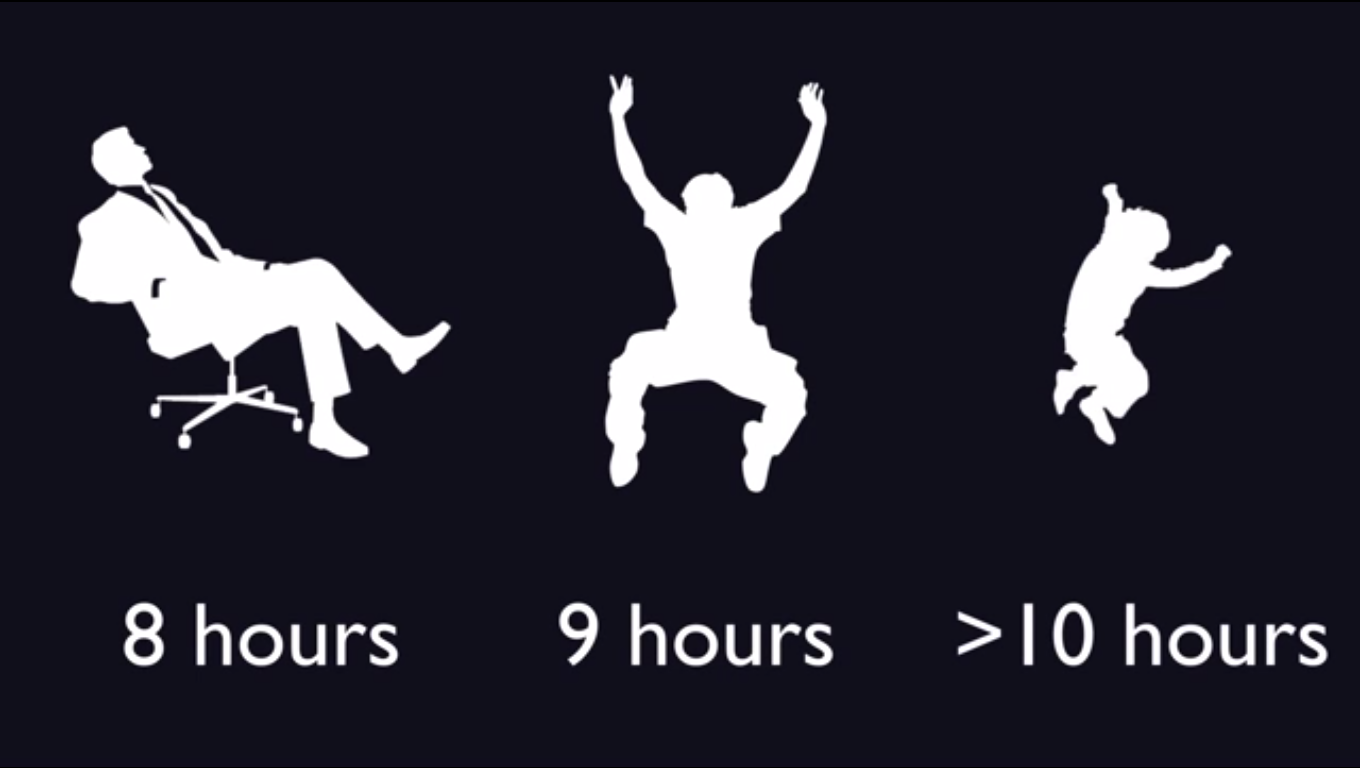
The average adult needs eight hours of sleep young adults in closer to nine and little children sleep much much longer
Even animals require varied amounts of sleep:
Species
Average total sleep time per day
Python
18 hrs
Tiger
15.8 hrs
Cat
12.1 hrs
Chimpanzee
9.7 hrs
Sheep
3.8 hrs
African elephant
3.3 hrs
Giraffe
1.9 hr
Source: bbc.co.uk, Video Source : AsapSCIENCE (Youtube channel)
HISTORY:Theancient Egyptiansused natural deposits ofNatron a mixture consisting mostly ofsodium carbonatedecahydrate, and sodium bicarbonate. The natron was used as a cleansing agent likesoap.
In 1791, a French chemist, Nicolas Leblanc, produced sodium carbonate, also known as soda ash. In 1846, two New York bakers, John Dwight and Austin Church, established the first factory to develop baking soda from sodium carbonate and carbon dioxide.
This compound, referred to as saleratus, is mentioned in the famous novel Captains Courageous by Rudyard Kipling as being used extensively in the 1800s in commercial fishing to prevent freshly-caught fish from spoiling.
ABOUT:Baking soda is a white crystalline powder (NaHCO3) better known to chemists as sodium bicarbonate, bicarbonate of soda, sodium hydrogen carbonate, or sodium acid carbonate. It is classified as an acid salt, formed by combining an acid (carbonic) and a base (sodium hydroxide), and it reacts with other chemicals as a mild alkali.
COOKING:Sodium bicarbonate, referred to as "baking soda" is primarily used in cooking (baking), as a leavening agent. It reacts with acidic components in batters, releasing carbon dioxide, which causes expansion of the batter and forms the characteristic texture and grain in pancakes, cakes, quick breads, soda bread, and other baked and fried foods. Acidic compounds that induce this reaction include phosphates, cream of tartar, lemon juice, yogurt, buttermilk, cocoa, vinegar, etc. Sodium bicarbonate can be substituted for baking powder provided sufficient acid reagent is also added to the recipe. Many forms of baking powder contain sodium bicarbonate combined with calcium acid phosphate, sodium aluminum sulphate or cream of tartar.
Heat causes sodium bicarbonate to act as a raising agent by releasing carbon dioxide when used in baking. The carbon dioxide production starts at temperatures above 80 °C. Since the reaction does not occur at room temperature, mixtures (cake batter, etc.) can be allowed to stand without rising until they are heated in the oven.
The Earth boasts not one but two rotations -- the inner core speeds along slightly faster than the rest of the planet.
If the Earth stopped spinning suddenly, the atmosphere would still be in motion with the Earth's original 1100 mile per hour rotation speed at the equator. All of the land masses would be scoured clean of anything not attached to bedrock. This means rocks, topsoil, trees, buildings, your pet dog, and so on, would be swept away into the atmosphere.The probability for such an event is practically zero in the next few billion years. If the process happened gradually over billions of years, the situation would be very different, and it is this possibility which is the most likely as the constant torquing of the Sun and Moon upon the Earth finally reaches it's conclusion. If the rotation period slowed to 1 rotation every 365 days a condition called 'sun synchronous', every spot in the Earth would have permanent daytime or nighttime all year long. This is similar to the situation on the Moon where for 2 weeks the front-side is illuminated by the Sun, and for 2 weeks the back side is illuminated. This situation for the Earth is not the condition of 'stopped' rotation, but it is as close as the laws of physics will let the Earth get.
If it stopped spinning completely...not even once every 365 days, you would get 1/2 year daylight and 1/2 year nightime. During daytime for 6 months, the surface temperature would depend on your latitude, being far hotter that it is now at the equator than at the poles where the light rays are more slanted and heating efficiency is lower. This long-term temperature gradient would alter the atmospheric wind circulation pattern so that the air would move from the equator to the poles rather than in wind systems parallel to the equator like they are now. The yearly change in the Sun's position in the sky would now be just its seasonal motion up and down the sky towards the south due to the orbit of the Earth and its axial tilt. As you moved along constant lines of Earth latitude, you would see the elevation of the Sun increase or decrease in the sky just as we now see the elevation of the Sun change from a single point on the Earth due to the Earth's daily rotation. As for other effects, presumably the magnetic field of the Earth is generated by a dynamo effect that involves its rotation. If the Earth stopped rotating, it's magnetic field would no longer be regenerated and it would decay away to some low, residual value due to the very small component which is 'fossilized' in its iron-rich rocks. There would be no more 'northern lights' and the Van Allen radiation belts would probably vanish, as would our protection from cosmic rays and other high-energy particles. This is a significant biohazard.